- Home /
- Crop Protection /
- PLUGGER, v.d.g.
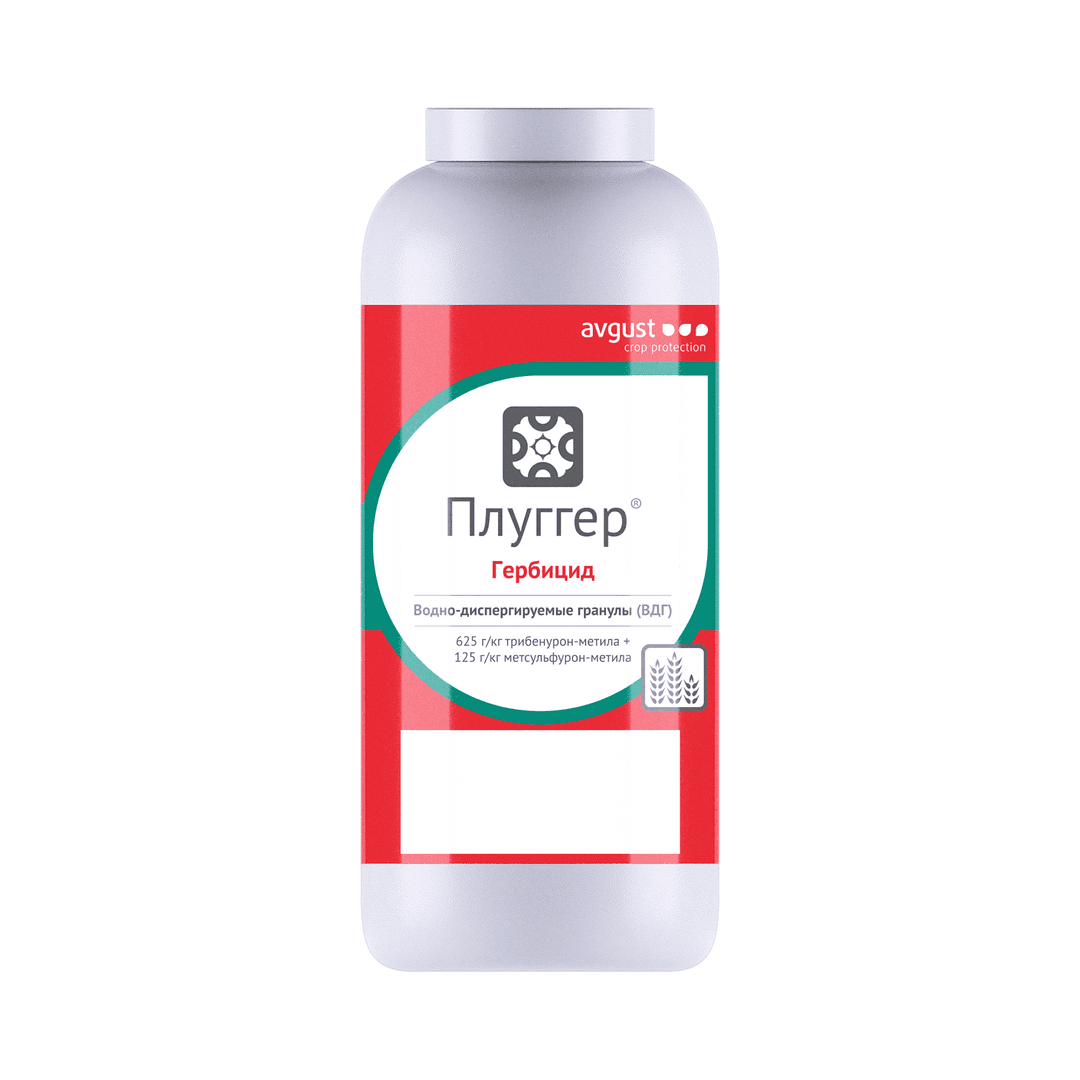
PLUGGER, v.d.g.
Higher efficiency, wider range, greater savings
- extended spectrum of action against dicotyledonous weeds due to the presence of two active ingredients
- high efficiency in the fight against thistle and thistle
- wide “window” of application (from the tillering phase to the appearance of the second internode)
- no risk of aftereffects and possibility of use in all types of crop rotations
- economical herbicide treatment
Characteristics of the active substance
tribenuron-methyl and metsulfuron-methyl belong to the chemical class of sulfonylurea derivatives and have a systemic effect.
Spectrum of action
Plugger® is highly effective against many types of annual and perennial dicotyledonous weeds, such as hemlock, ragweed (seedlings), thistle (species), common warthog, speedwell (species), geranium (species), knotweed (species), common pea, mustard field and black, Tartary buckwheat, Gulyavnik (species), Sophia's descurainia, annual divala, Levokoy, common chickweed, field cabbage, stinging nettle, common groundsel, field buttercup, white pigweed, Canadian small petal, dandelion officinalis, sow thistle (species), shepherd's purse, pickleweed (species), weed sunflower, field navel, wild radish, chamomile (species), roofing scurf, common gum, curly sorrel, upturned acorn, tender chorispora, field violet, purple jasmine, field marigold, etc. The drug works both on weeds that have sprouted and germinate during treatment.
Mechanism of action
the active ingredients of the drug block the formation of the enzyme acetolactate synthase, which is involved in the synthesis of essential amino acids. The herbicide has a systemic effect, is absorbed through leaves and roots and easily moves through the weeds, stopping their growth.
Rate and symptoms of exposure
Plugger® quickly enters through the leaves and moves throughout the weed plant. The growth of sensitive weeds stops a few hours after spraying. The rate of manifestation of growth retardation depends on weather conditions at the time of treatment (humidity, temperature), the species composition of weeds and the phase of their development (young plants are more sensitive to the herbicide). 1 - 3 weeks after treatment, the leaves of weeds become chlorotic, the growing point dies; After 2 - 3 weeks, complete death of the weeds is noted.
Manufacturer:
Avgust
Crop:
Spring wheat, Spring barley
Product type:
Herbicides