- Home /
- Crop Protection /
- Profit
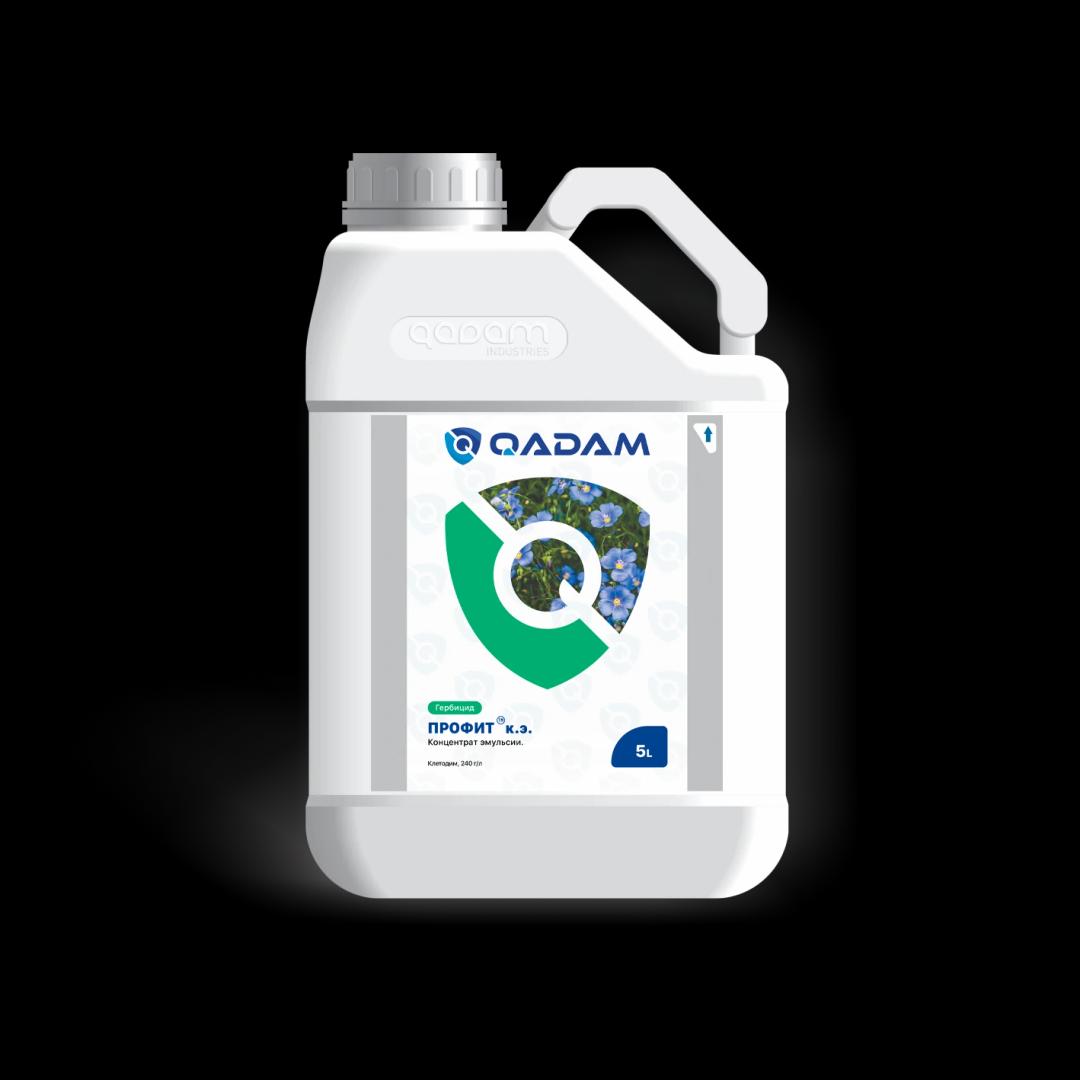
Profit
Appointment
Highly selective systemic graminicide for control of annual and perennial cereal weeds in rapeseed, sunflower, safflower and flax crops. The drug provides reliable control of weeds together with the root system without significant stress for the crop.
Technical data sheet
Active ingredient: kletodim (240 g/l)
Chemical Class: Cyclohexanediones
Preparation form: emulsion concentrate (c.e.)
Packing: 5 l canister
Advantages and mechanism of action
1. The rapid cessation of competition
Kletodim blocks the synthesis of lipids at the growth points of cereal weeds shortly after treatment.
The result: the growth of cereals stops during the first day, which reduces competition for moisture and nutrients.
2. Systemic effect on the root system
The drug moves through the plant and penetrates into the nodes of tillering and rhizomes of perennial cereals.
The result: complete suppression of weeds, including underground organs, is ensured with minimal risk of regrowth.
3. Selectivity and technological flexibility
The drug is characterized by high softness to dicotyledonous crops and can be used regardless of their development phase.
The result: it becomes possible to choose the optimal treatment period for weeds without a pronounced phytotoxic effect on crops.
Rules of application
The treatment is carried out regardless of the phase of culture development.
Safflower
Consumption rate: 0.4–0.6 l/ha
Object: annual and perennial grass weeds
Application phase: 2-6 leaves of annual cereals / wheat grass height 10-20 cm
Rapeseed, flax, sunflower
Consumption rate: 0.2–0.4 l/ha
Object: annual grass weeds
Application phase: spraying in phase 2-6 of weed leaves
Rapeseed, flax, sunflower
Consumption rate: 0.7–1.0 l/ha
Object: perennial grass weeds
Application phase: spraying at a height of 10-20 cm of wheatgrass
Agronomist's Advice: strategy and compatibility
Antagonism in mixtures: when combined with herbicides against dicotyledonous weeds, especially of the hormonal type, the effectiveness against wheatgrass may decrease.
Optimal strategy: for maximum processing results, it is better to separate. First, dicotyledonous weeds are controlled, then gramicide is applied after 5-7 days.
Single–pass mixtures: if mixing is unavoidable, the addition of SYLVESTER adjuvant at a rate of 0.025-0.05 l/ha is recommended to improve absorption and reduce the risk of antagonism.
Application features on safflower: it is advisable to carry out processing already in the rosette phase, since cereal weeds actively consume surface moisture during this period.
Features of application on flax: High selectivity allows the drug to be used in the herringbone phase, controlling oatmeal and other cereal weeds in the early stages of competition.
Temperature range: optimal conditions for application are +15...+25°C. It is not recommended to carry out processing on crops under severe stress.
Manufacturer:
QADAM
Crop:
Rapeseed, Flax, Sunflower
Product type:
Herbicides